7 Signs Your Orange County Home Needs a Repipe
In short
- —A climbing water bill with no change in use usually means a hidden leak.
- —A warm floor or hissing at night is a slab leak warning.
- —Build date and pipe material matter more than how the house looks.
- —Low pressure, brown water, and repeat pinholes mean the system is failing.
1. Your water bill climbed and nothing changed
Same household, same habits, bill up $20–40 a month. A slab or in-wall leak can run for months before anything stains a ceiling — the water leaves through your meter and never reaches a fixture.
Check it yourself
- Shut off everything — faucets, dishwasher, washer, ice maker, irrigation
- Read the meter at the curb, or watch the small leak-detection triangle
- Wait 30–60 minutes using no water, then read it again
Any movement means water is escaping behind a wall or under the slab.
What this means: You're already paying for the repipe — just to the water district.
2. A warm spot on the floor, or water you can hear with everything off
Most of South OC sits on slab, and hot-line leaks radiate heat straight up through the concrete. Both of these symptoms are specific enough to act on today.
Check it yourself
- Warm spot: walk the tile barefoot in the morning. No vent, no sunbeam, no appliance nearby means a hot line under the slab.
- The sound: listen at 11pm near the base of walls with every fixture off. A faint hiss is pressurized water escaping.
- Backup signs: damp carpet with no source, tiles lifting, hardwood cupping, a musty smell that keeps returning
What this means: One slab leak can be spot-repaired. Three or four means jackhammering floors to patch a system that's still failing everywhere else.
3. Your home falls in one of three risk windows
This one isn't a symptom — it's a build date and a material, and it's the sign homeowners most often rule themselves out of by mistake. Check your water heater closet or under a bathroom sink.
Galvanized steel Pre-1970 · risk high
Dull gray metal, threaded, magnet sticks
Polybutylene 1978–1995 · risk high
Gray, blue or black flexible plastic, often stamped "PB2110"
Type M copper 1990s–2000s · risk moderate–high
Reddish-brown metal, soldered joints, thin wall
PEX 2000s+ · risk low
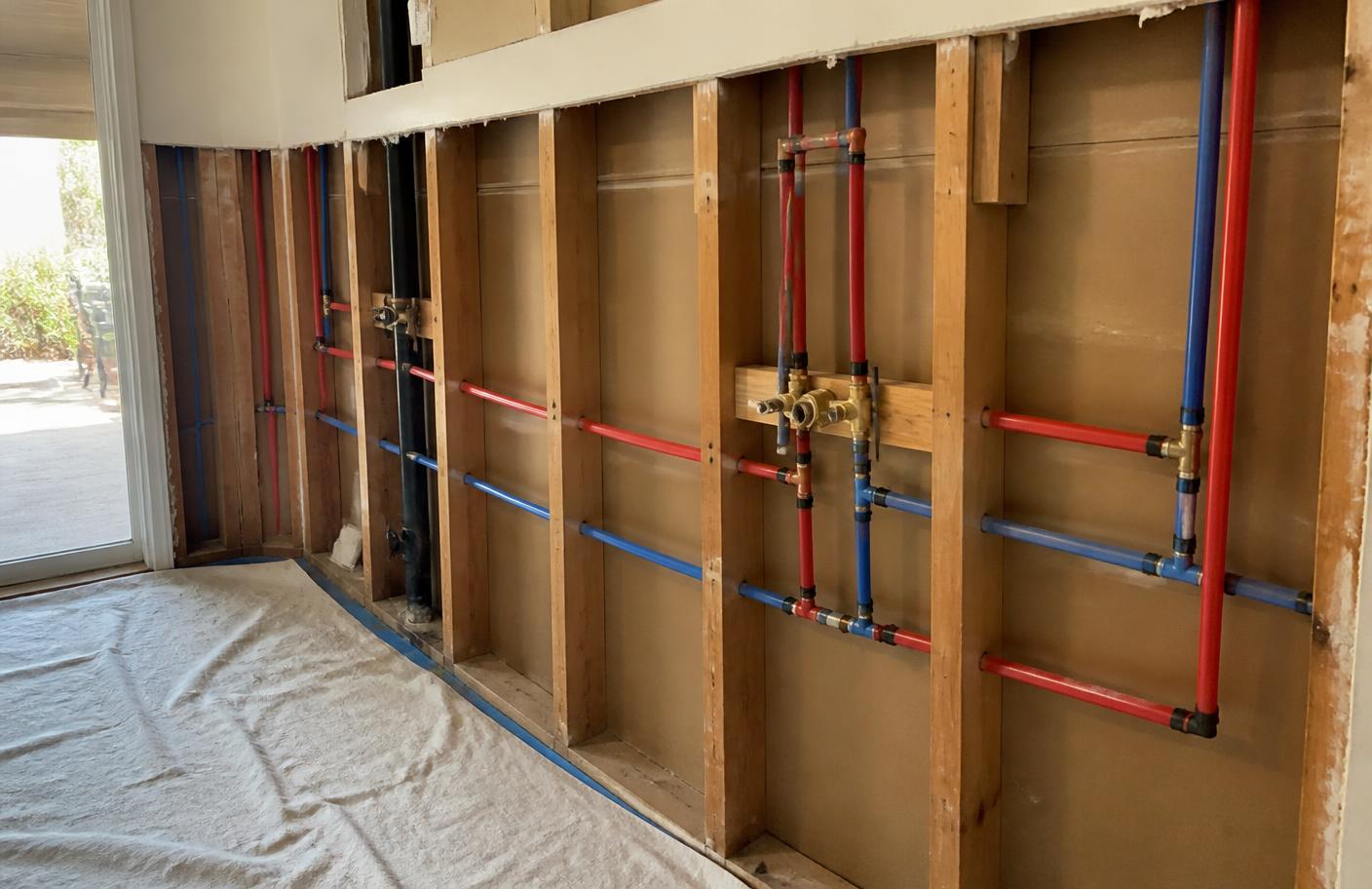
Red/blue/white flexible tubing, crimp rings
Galvanized steel has a 40–50 year service life. Polybutylene degrades from the chlorine in municipal water and goes brittle from the inside — there is no test for it, and many carriers now surcharge or decline these homes.
Type M copper is the one people miss. Plenty of South OC homes built in the late 90s and 2000s were plumbed with the thinnest-wall grade made — less wall for corrosion to chew through, same hard water. We pull pinholes out of 20-year-old houses regularly.
What this means: A 2001 build is not automatically safe. Age alone is reason enough for a free assessment.
4. An inspector or your insurer flagged your plumbing
This one arrives as mail, not as a symptom: a premium increase after a water claim, a renewal questionnaire asking about pipe material, a non-renewal notice, or a buyer's inspection report landing mid-escrow. California carriers are pricing water-damage risk aggressively right now.
Worth knowing before you file anything
- Policies typically cover the resulting damage — flooring, drywall, restoration
- They typically do not cover the failed pipe itself
- Claims tied to gradual wear and corrosion get denied routinely
What this means: Handle it on your schedule, not escrow's. A documented repipe is often the fastest route back to standard rates.
5. Your water pressure dropped and never came back
Galvanized steel corrodes from the inside and packs with mineral scale until a ¾-inch line has the working diameter of a drinking straw. South OC water runs 8–19 grains per gallon of hardness. The tell is whether it's the whole house or one fixture.
Check it yourself
- Run the kitchen faucet, then flush a toilet and start a shower. Does the kitchen drop to a trickle?
- Soak the aerators on two faucets — occasionally that's all it is
- Put a $12 gauge on the hose bib. Healthy is 45–80 psi
What this means: If pressure is fine at the hose bib but weak at every fixture, the restriction is inside your walls.
6. Brown or rusty water at first draw
Turn on a tap that sat overnight. If the first few seconds run orange, yellow, or cloudy, water sat in a corroding line, dissolved the rust, and delivered it to the faucet. It shows up worst after a vacation, or in the guest bath nobody uses.
Check it yourself
- Cold side, or both hot and cold? That's the piping
- Hot only? Usually the water heater — a spent anode rod or tank sediment
- Passive evidence: rust staining in a tub that won't scrub out, orange rings in a rarely-used toilet tank
What this means: You're drinking what's left of your pipes.
7. You've had more than one pinhole leak
A pinhole is pitting corrosion eating through copper from the inside out. That spot didn't get unlucky — it got thin first. Corrosion hits hardest at elbows and tees, and a typical OC home has dozens of them.
Check it yourself
- Ask the plumber who patched it to save the cut-out section
- Pitting scattered across the whole sample means the problem is the system, not the spot
What this means: The second leak is the warning. The third is the flood.
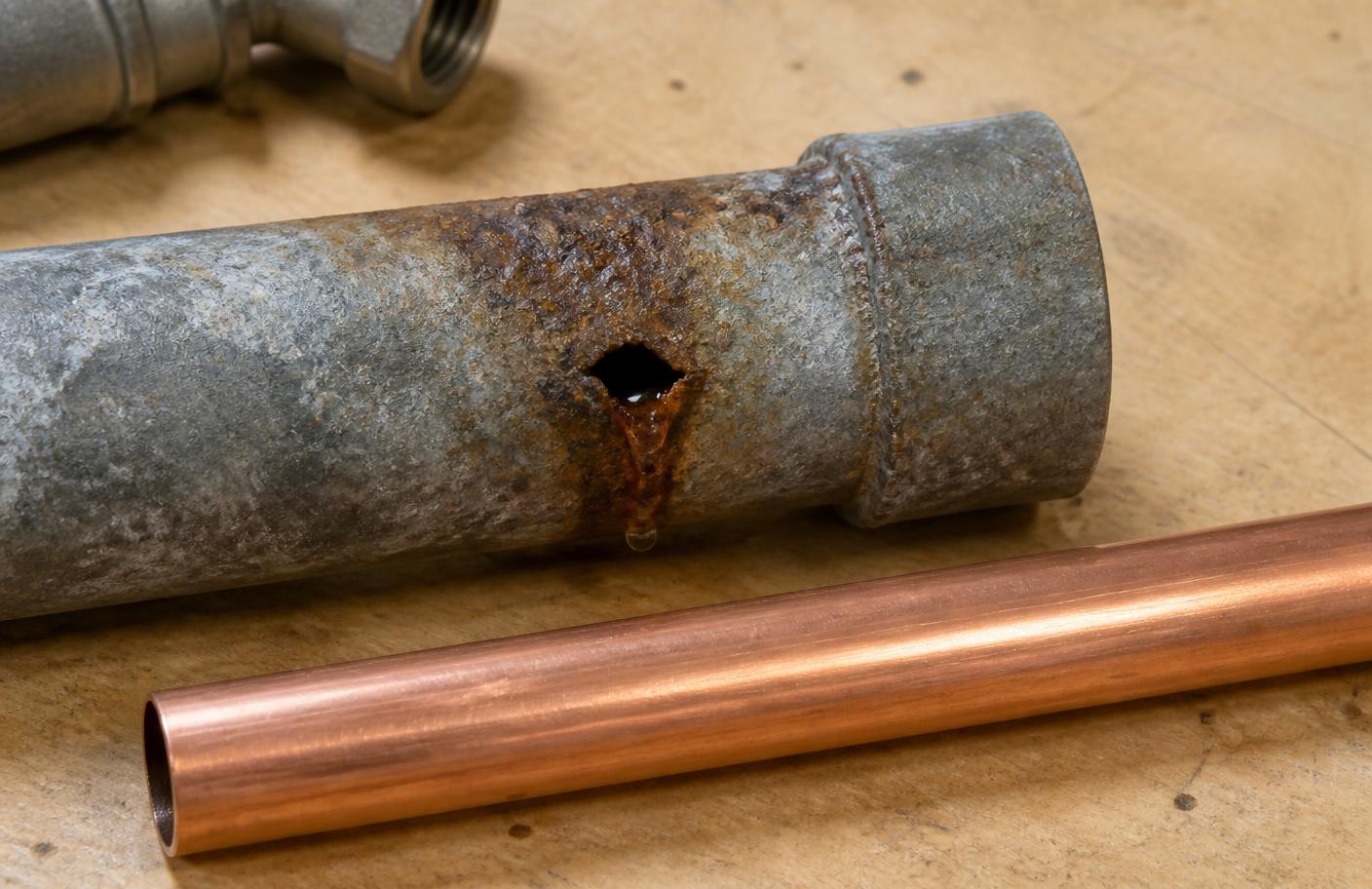
A pinhole we cut out of an OC home. The same wall thickness runs through the rest of the house.
What a repipe costs here
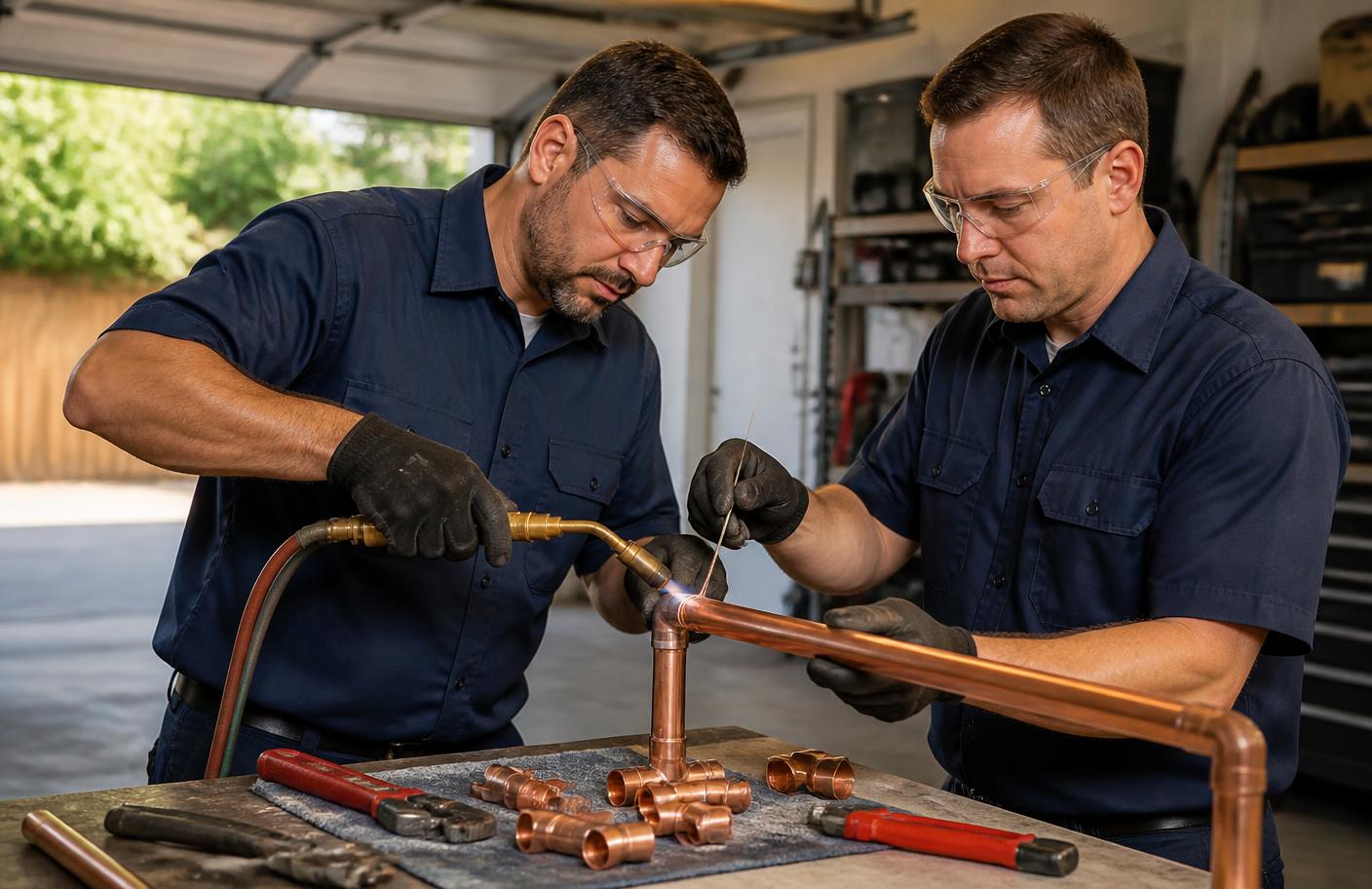
Whole-house PEX-A repipes start at $7,999 and Type L copper at $8,999 — drywall and permits included. Final pricing depends on square footage, number of bathrooms, and material. Financing runs from 0% APR up to $25,000 on 3–60 month terms, and prequalifying takes about 60 seconds with no credit impact.
The number that matters isn't the headline price — it's whether the quote is complete. Ours includes:
- Permits pulled and inspection scheduled
- Uponor PEX-A or USA-made Type L copper
- Drywall patch, texture match and repaint
- HEPA dust control, full cleanup and haul-away
- In-house W-2 crews, never subs or day laborers
- Lifetime workmanship warranty
The three items most often missing from a lowball bid are the permit, the drywall patch and paint, and the haul-away. Ask about all three before comparing prices.
How the job actually runs
- 1. Free assessment. A licensed estimator walks the home, checks material and pressure, and counts fixtures.
- 2. Flat written price. One all-inclusive number, with PEX-A and copper options side by side. No obligation.
- 3. Repipe. Most homes are repiped in 1–2 days. Water is off during working hours only — you keep water every night and you don't move out.
- 4. Patch, paint, inspect. Drywall and paint the following day, city inspection scheduled by us, then a lifetime workmanship warranty.
Quick answers
- How much does a repipe cost?
- PEX-A repipes start at $7,999 and Type L copper at $8,999, including permits, drywall repair and repaint. Estimates are free and financing starts at 0% APR.
- How long does it take, and can I stay home?
- Most whole-house repipes finish in 1–2 days, with drywall the following day. You can stay — water is shut off during working hours and restored each evening, and we clean up daily.
- PEX-A or copper?
- Both are good pipe. Uponor PEX-A flexes instead of bursting, installs with fewer wall openings, and doesn't pinhole. Type L copper runs 20–35% more and suits exposed runs or HOA requirements.
- Do you repair the drywall afterward?
- Yes. Every repipe includes drywall patch, texture match, repaint of opened areas, and full cleanup — all in the flat price.
- Do I need a permit?
- Yes, in every South OC city we work in. We pull it and schedule the inspection.
- Will a water softener fix this?
- It slows future corrosion and protects your water heater, so it's worth installing. It can't rebuild pipe wall that's already gone.
- Does homeowners insurance cover a repipe?
- Almost never. Insurance covers sudden accidents, not pipes wearing out over time.
- Are you licensed and insured?
- Yes — licensed (Lic. #1037177) and insured, with all work permitted and inspected. Repipes only, 11+ years in South Orange County.
The pattern to watch for
One sign can have another explanation. A warm floor might be a sunbeam. A high bill might be the irrigation timer.
Two or more together is the pattern. A climbing bill plus a warm spot plus a sound at night isn't three coincidences — it's one slab leak. Low pressure plus brown water in a 1965 house is galvanized steel finishing its life.
Pipes fail gradually, and then all at once. The gap between the first quiet signal and the ceiling coming down is where you still have choices: scheduled work instead of emergency work, a fixed price instead of a restoration bill.